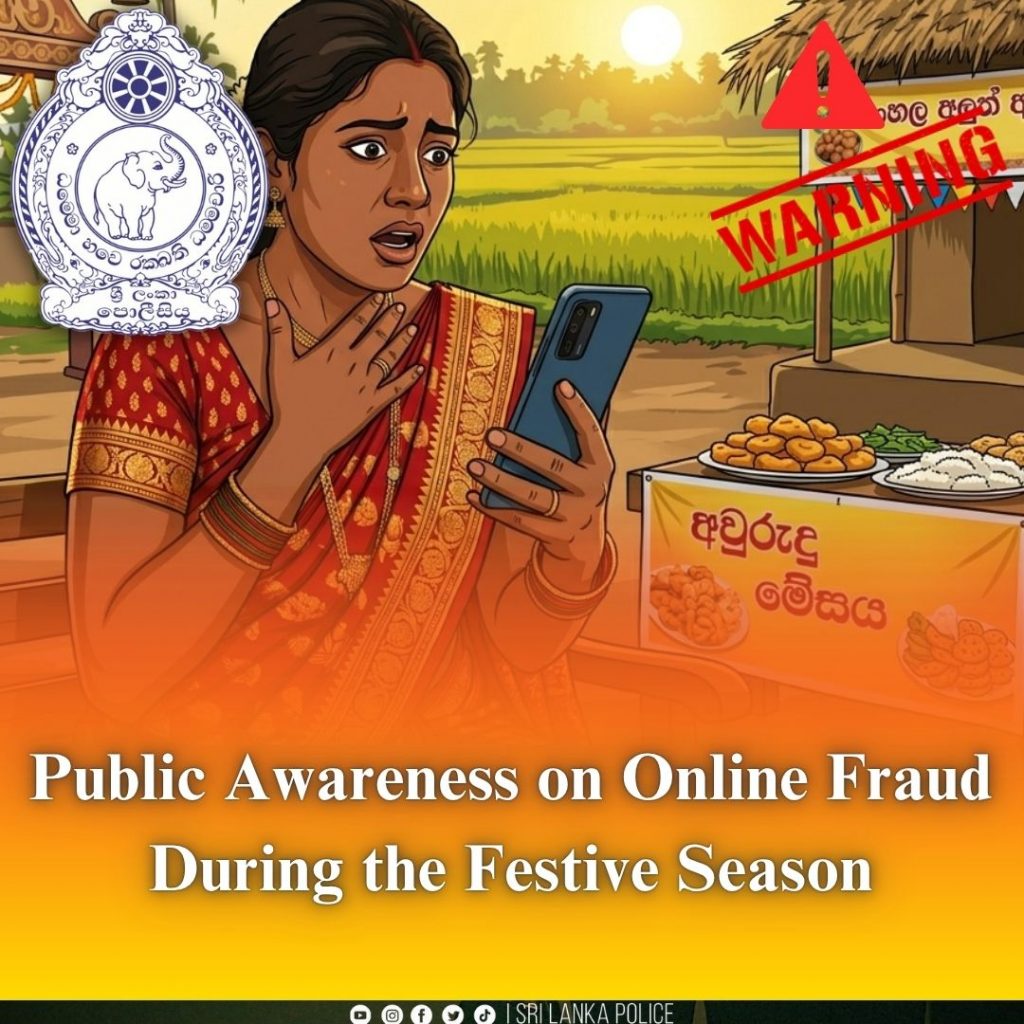
During the Sinhala and Hindu New Year period, many people rely on the internet to carry out various transactions, including purchasing goods and making payments. However, this time of increased online activity has also led to a rise in cybercrime, with offenders using diverse tactics to illegally obtain money and sensitive personal information.
Based on complaints received by police stations and the Criminal Investigation Department in recent years, it has been observed that certain individuals become vulnerable to these scams, often due to financial pressures and the temptation of quick financial benefits.
Investigations have revealed that such online fraud is carried out through multiple methods, including deceptive advertisements, malicious links, Avurudu-themed promotions and giveaways, counterfeit trading platforms, fraudulent bank offers, fake bank websites or app updates, QR code scams, phishing emails, SMS-based scams, imitation websites designed to appear legitimate, and caller ID spoofing.
Furthermore, scammers may exploit images of prominent figures such as the President, the Prime Minister, and well-known celebrities to create a false sense of trust and credibility. There is also an increased risk of targeted phishing attacks, financial scams, and identity theft through the misuse of personal data obtained via fraudulent means.
In light of these risks, the Police urge the public to remain vigilant, exercise caution, and maintain a clear understanding when conducting online transactions, in order to avoid becoming victims of such criminal activities.